
 Save to Pinterest
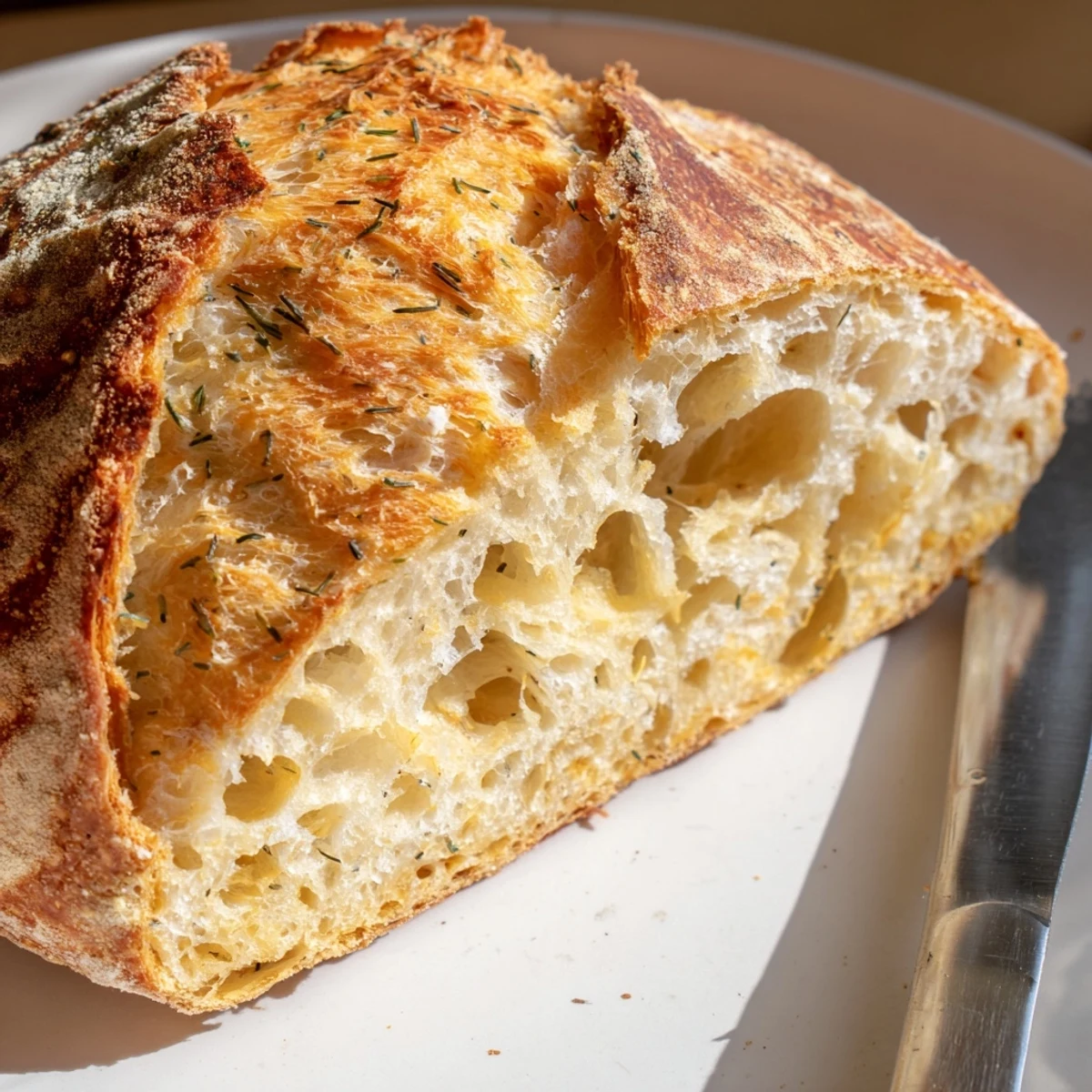
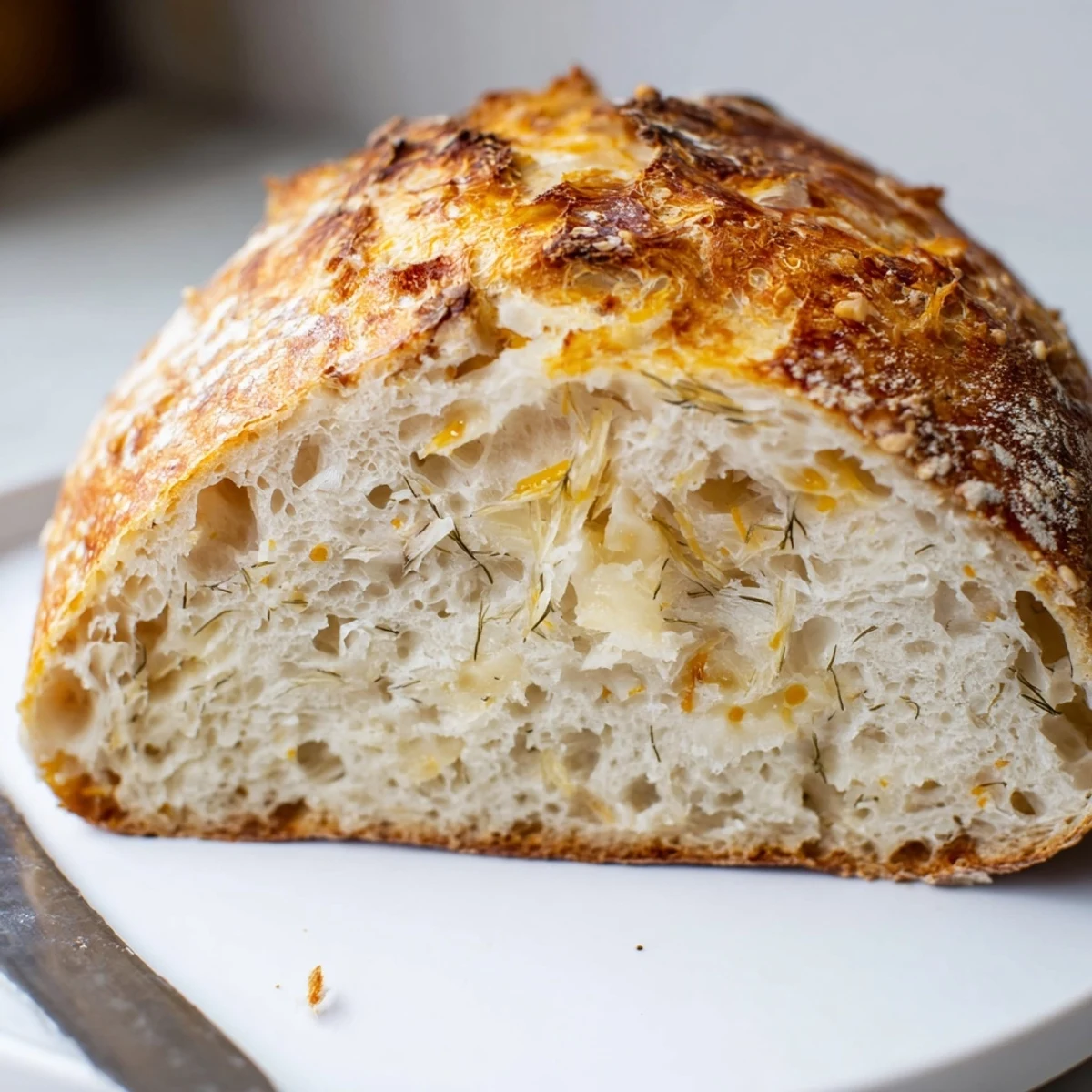
 Craft a stunning artisan loaf without the kneading work. This European-style bread combines fragrant fresh dill with rich, creamy Gouda cheese for a deeply flavorful creation. The long fermentation creates exceptional depth, while baking in a preheated Dutch oven delivers that coveted professional bakery crust—golden, crackling, and beautifully crisp.
The process is wonderfully simple: mix flour, yeast, salt, grated cheese, and chopped herbs with water, then let time work its magic over 12–18 hours. The sticky dough transforms into a bubbly, risen masterpiece ready for shaping.
Bake at high heat covered for 30 minutes, then uncover to achieve the perfect deep-golden finish. Cool completely before slicing to preserve the tender, airy crumb structure.
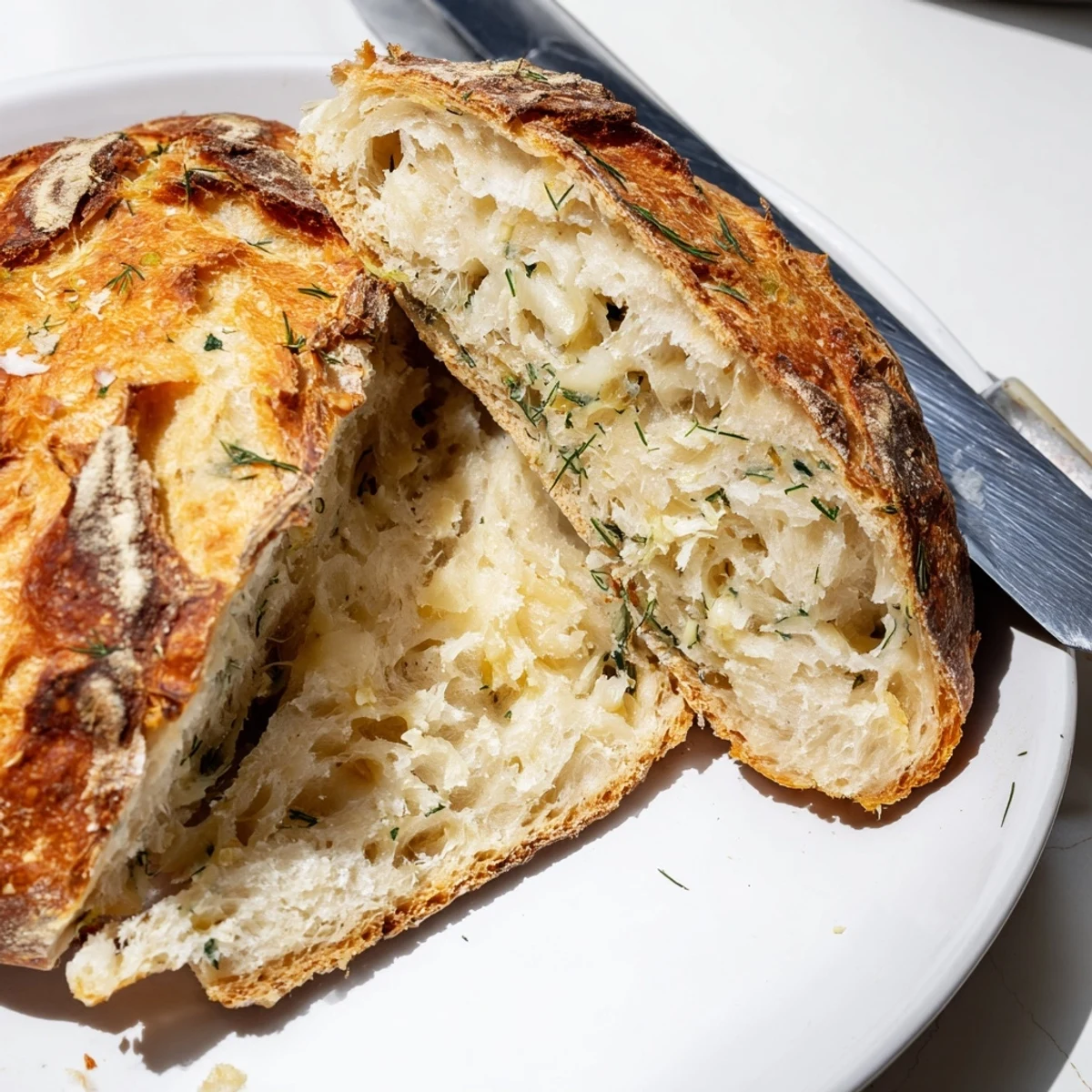
My tiny apartment kitchen smelled incredible when I first experimented with adding cheese to no-knead dough. The Gouda melts into pockets throughout the crumb while the dill creates these aromatic little bursts that make every slice interesting. I had friends over for soup that night and we kept breaking off piece after piece.
I brought a loaf to my parents house last winter and my dad kept sneaking slices while I was still unpacking my bag. He said it reminded him of this cheesy bread we used to get at a bakery near his childhood home. Now he requests it every time I visit.
Ingredients
- Bread flour: Higher protein content gives the bread structure while keeping that soft interior
- Instant yeast: No need to dissolve it first, just mix it right in with the flour
- Salt: Enhances all the flavors and helps control fermentation
- Gouda cheese: Aged Gouda adds the best savory depth but mild works if thats what you have
- Fresh dill: Those feathery fronds perfume the entire loaf with their bright flavor
- Lukewarm water: Should feel like bath temperature, not hot or it will kill the yeast
Instructions
- Mix the dough:
- Combine flour, salt, and yeast in a large bowl, then stir in the grated Gouda, chopped dill, and pepper. Add the water and mix until you have a shaggy, sticky dough.
- Let it rest:
- Cover tightly with plastic wrap and let sit at room temperature for 12 to 18 hours until bubbly and doubled in size.
- Shape the loaf:
- Turn the dough onto a floured surface and gently fold the edges toward the center to form a round. Place seam side down on parchment paper.
- Second rise:
- Cover loosely with a towel and let rest for 30 to 60 minutes while you preheat your oven with a Dutch oven inside at 450°F.
- Bake covered:
- Carefully lift the parchment and dough into the hot Dutch oven, score the top, and bake covered for 30 minutes.
- Finish baking:
- Remove the lid and bake another 15 to 20 minutes until deep golden brown and the crust sounds hollow when tapped.
 Save to Pinterest
 This bread became my go to host gift because it travels so well and looks impressive arriving in a basket. People always assume it took way more effort than it actually did.
Cheese Variations Worth Trying
I have played around with different cheeses and found that sharp cheddar creates these incredible gooey pockets while Emmental adds a subtle nutty sweetness. Smoked Gouda takes this bread in a completely different direction that pairs beautifully with tomato soup.
Getting the Best Crust
The Dutch oven method creates steam that transforms the crust into something bakery quality. I tried baking this on a regular baking sheet once and while it still tasted good, that crackle was completely missing.
Serving Ideas
This bread shines alongside hearty soups but also makes the most incredible grilled cheese you will ever eat. The dill already inside the bread adds an extra layer of flavor that makes simple recipes feel special.
- Try toasting slices and topping with cream cheese and smoked salmon
- Cube leftover bread and make croutons for Caesar salad
- Wrap cooled loaves tightly and freeze for up to a month
 Save to Pinterest
 There is something magical about pulling a steaming hot loaf from the oven you made with your own hands. This bread has a way of making ordinary Tuesday dinners feel like a special occasion.
Recipe Questions & Answers
- → Can I use dried dill instead of fresh?
-
Yes, substitute 1 tablespoon of dried dill for the 3 tablespoons of fresh dill called for in the ingredients.
- → What cheese works best as a Gouda substitute?
-
Sharp cheddar or Emmental both provide excellent flavor and melting properties. Cheddar offers a bolder taste while Emmental delivers a nutty sweetness similar to Gouda.
- → Why must I wait 12–18 hours for rising?
-
The extended fermentation develops complex flavors and creates the characteristic airy, open crumb structure. This slow rise allows natural enzymes to break down starches, resulting in better texture and depth.
- → Can I bake without a Dutch oven?
-
A Dutch oven creates steam essential for crust development. If unavailable, bake on a preheated baking stone and place a metal pan of hot water on the lower rack to generate steam.
- → How should I store leftovers?
-
Wrap tightly in plastic or store in a sealed bag at room temperature for 2–3 days. For longer storage, slice and freeze in freezer bags, toasting directly from frozen.
- → Why is cooling for an hour necessary?
-
The interior continues cooking while cooling. Cutting too early releases steam, causing the crumb to become gummy and dense. Patience ensures the proper texture develops fully.