
 Save to Pinterest
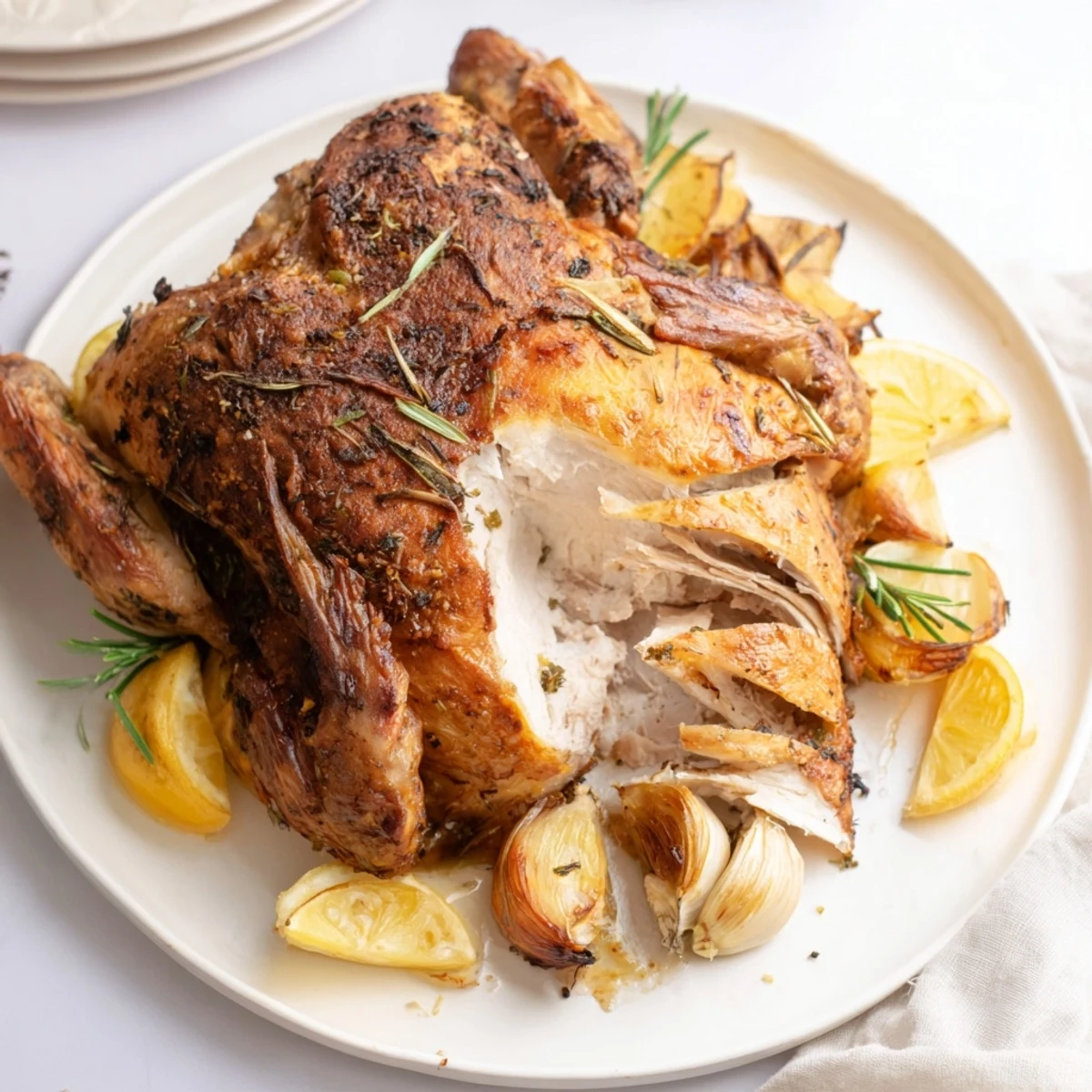
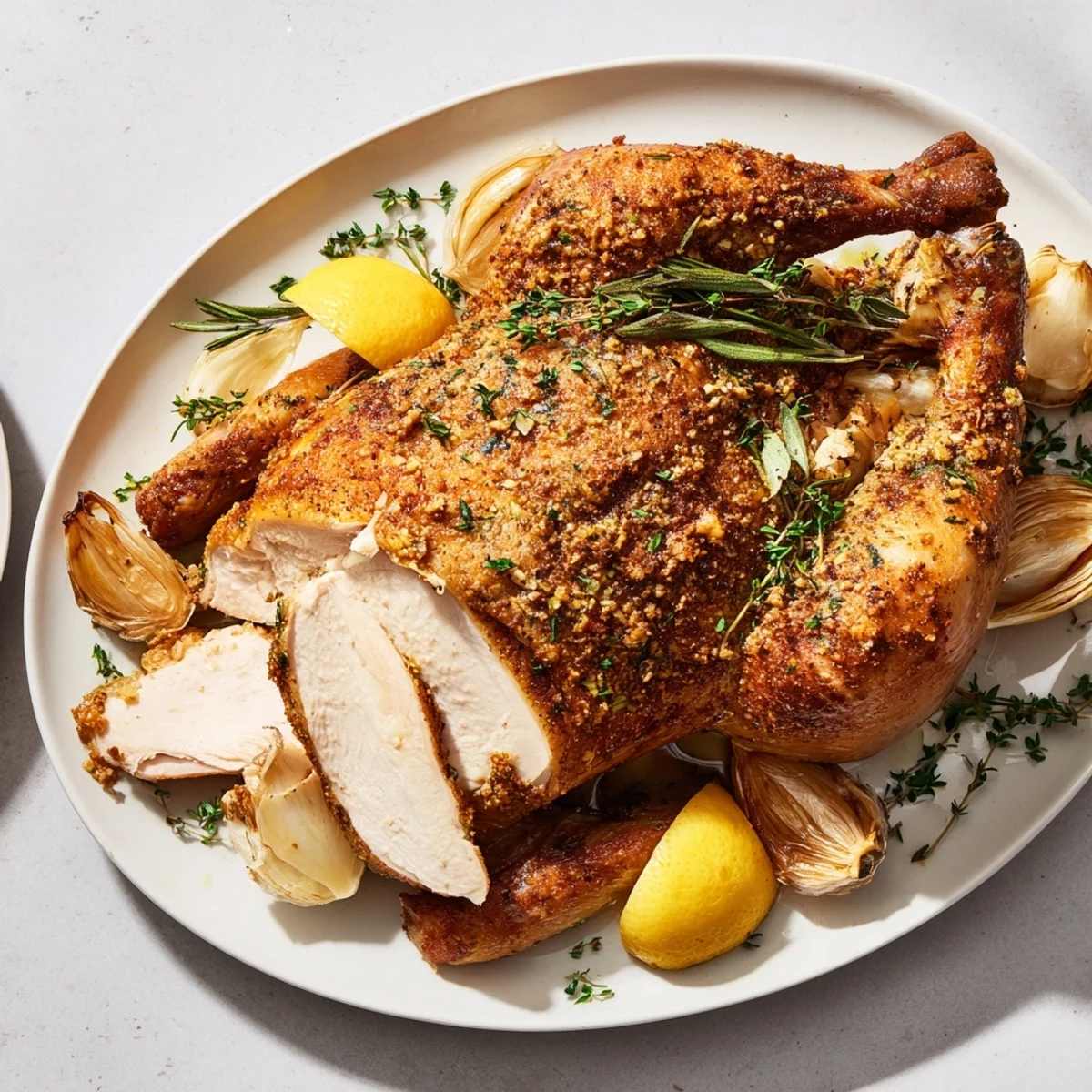
 This roasted chicken combines the deep flavor of garlic and fresh herbs with zesty lemon to create a succulent main dish. The whole chicken is seasoned inside and out, slow-roasted to juicy perfection with crispy skin. Aromatics like garlic, lemon, and onion infuse the meat during cooking, while fresh thyme and rosemary add an earthy note. Resting the bird before carving helps keep it moist and tender. Ideal paired with roasted vegetables or potatoes for a comforting, gluten-free meal.
There's something about the smell of a whole chicken roasting with garlic that stops you mid-conversation, makes you close your eyes, and just breathe it in. I learned to make this dish on a rainy Sunday when my kitchen felt too quiet, and I decided that what I really needed was the kind of golden-brown chicken that fills every corner of your home with warmth. The first time I pulled it from the oven, my hands shook a little—not from nerves, but from knowing I'd somehow gotten it exactly right.
I made this for friends who were going through a rough patch, and watching them eat in complete silence—the good kind of silence—reminded me that sometimes the simplest dishes are the ones people actually need. My friend Marcus asked for the recipe the moment he finished, and I realized I'd never written it down because I just made it the same way every time, on instinct. Now it's the meal I turn to when I want to feed people properly, without fuss.
Ingredients
- 1 whole chicken (about 1.5 kg / 3.3 lbs), giblets removed: This is your foundation—choose one that feels substantial in your hands, not scrawny, because a good bird makes all the difference.
- 1 head garlic, halved horizontally: Don't bother peeling individual cloves; the halved head releases its oils as it roasts and perfumes everything around it.
- 1 lemon, halved: The acid keeps the meat tender and adds brightness that you can taste even though you won't see it.
- 1 medium onion, quartered: It dissolves into the pan juices and becomes part of the magic you'll want to drizzle over everything.
- 2 tbsp olive oil: Good oil matters here because it's one of the few ingredients doing visible work on the skin.
- 2 tsp kosher salt: This is where seasoning happens—don't skimp or substitute with fine salt, which tastes harsher.
- 1 tsp freshly ground black pepper: Fresh grinding makes all the difference; pre-ground tastes like dust by the time you need it.
- 1 tbsp fresh thyme leaves (or 1 tsp dried thyme): Fresh is always better, but dried works if that's what's in your cabinet—just use less.
- 1 tbsp fresh rosemary, chopped (or 1 tsp dried rosemary): These hardy herbs stand up to heat beautifully and add a subtle earthiness that keeps things interesting.
- Fresh parsley, chopped (optional for serving): A handful scattered over the carved chicken adds color and a final fresh note.
Instructions
- Get your oven ready:
- Preheat to 425°F (220°C) about fifteen minutes before you plan to put the chicken in, so it's properly hot and the skin will start crisping right away.
- Dry the chicken thoroughly:
- Pat it completely dry with paper towels—this is the secret to golden, crispy skin. Any moisture clinging to the surface will steam instead of brown.
- Season generously inside and out:
- Rub the chicken everywhere with olive oil, salt, and pepper, working the seasonings into every crevice and remembering the inside matters just as much as what shows.
- Stuff the cavity:
- Stuff the halved garlic, lemon halves, onion quarters, and chopped herbs inside the bird—this is where half the flavor comes from, so don't skip it or rush it.
- Tie and tuck:
- Use kitchen twine to bind the legs together and tuck the wing tips underneath so nothing sticks out and burns while everything else is still cooking.
- Roast until golden:
- Place on a rack in a roasting pan and roast for 1 hour 15–20 minutes until a thermometer reads 165°F (74°C) in the thickest part of the thigh and the juices run clear when pierced. The exact time depends on your oven's personality.
- Rest before carving:
- Let it rest for 10–15 minutes on a cutting board—this is not wasted time, it's when the juices redistribute and the meat stays tender instead of drying out as soon as you cut it.
- Finish and serve:
- Scatter fresh parsley over the carved pieces if you have it, and spoon those incredible pan juices over everything.
 Save to Pinterest
 There was a night when I made this for someone who'd been living on takeout for weeks, and watching them eat a piece of this chicken—really eat it, with attention and care—felt like I'd given them something they didn't know they'd been missing. That's when I understood that good food is sometimes just an act of saying I'm paying attention to you.
The Magic of Simplicity
This recipe works because it doesn't try to be clever—it's garlic, lemon, herbs, and heat doing exactly what they were meant to do. The fewer ingredients you have, the more important each one becomes, which is why I taste before I season and why I use good oil instead of whatever's on sale. There's a lesson in that for cooking and maybe for life too.
Making It Your Own
You don't have to follow this exactly, and honestly that's the beauty of roasted chicken. If you love sage more than thyme, use sage. If you have tarragon or oregano sitting in your cabinet, that becomes your version of this dish. I've made it with entirely different herbs depending on what was growing in someone's garden or what I had on hand, and it's never failed to be wonderful. The structure is flexible enough to bend toward your own preferences while staying delicious.
Serving and Pairing
Roasted chicken is one of those meals that stands completely on its own, though it pairs beautifully with almost anything you want to put on the side. Root vegetables roasted in the same oven, a crisp salad, crusty bread for soaking up those pan juices—any of these turn a simple meal into something that feels complete. A dry white wine like Sauvignon Blanc sits beside this chicken as if they were meant to find each other.
- Save those pan drippings because they're liquid gold for gravy or for drizzling over vegetables the next day.
- Leftover chicken shreds into salads, sandwiches, and soups better than almost any protein you'll cook.
- The bones make incredible stock if you're into that kind of thing, turning one meal into two or three.
 Save to Pinterest
 This is the kind of dish you make when you want to feed people well without overthinking it, and it never disappoints. I hope it becomes as much a part of your kitchen life as it is mine.
Recipe Questions & Answers
- → How do I ensure the chicken stays juicy?
-
Rub olive oil inside and out, stuff with aromatics, and roast until the internal temperature reaches 165°F. Let it rest before carving to retain juices.
- → Can I use other herbs instead of thyme and rosemary?
-
Yes, sage or oregano work well as alternatives, offering different aromatic flavors to the roasted chicken.
- → What is the best way to achieve crispy skin?
-
Baste the chicken with pan juices halfway through roasting and ensure the skin is dry before cooking.
- → How long should the chicken rest before serving?
-
Allow the chicken to rest for 10-15 minutes after roasting to let the juices redistribute and keep the meat tender.
- → What side dishes pair well with garlic roasted chicken?
-
Roasted vegetables, potatoes, or a crisp salad complement the rich flavors of the chicken perfectly.